


Given the
root of an n-ary tree, return the preorder traversal of its nodes’ values.Nary-Tree input serialization is represented in their level order traversal. Each group of children is separated by the null value (See examples)
Example 1:
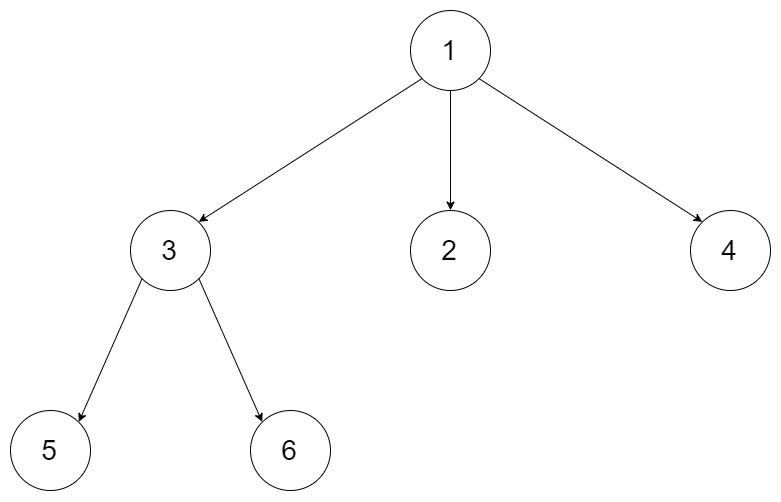
Input: root = [1,null,3,2,4,null,5,6]
Output: [1,3,5,6,2,4]
Example 2:
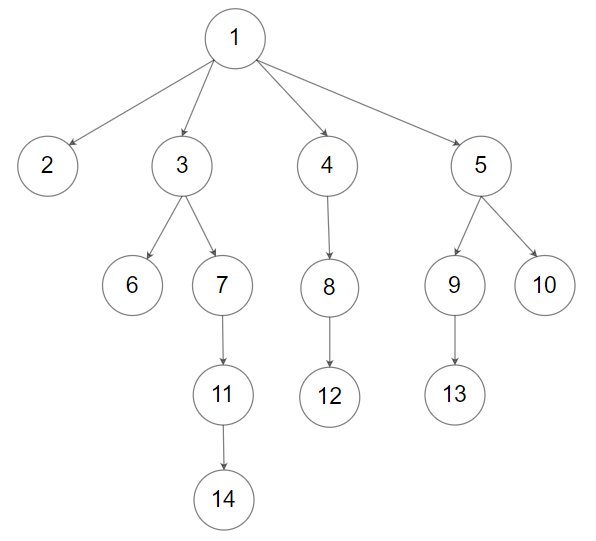
Input: root = [1,null,2,3,4,5,null,null,6,7,null,8,null,9,10,null,null,11,null,12,null,13,null,null,14]
Output: [1,2,3,6,7,11,14,4,8,12,5,9,13,10]
Constraints:
The number of nodes in the tree is in the range
[0, 10<sup>4</sup>].
0 <= Node.val <= 10<sup>4</sup>The height of the n-ary tree is less than or equal to
1000.*Follow up: Recursive solution is trivial, could you do it iteratively?
题目大意:
求n个儿子的树的前序遍历
DFS解题思路:
严格按照定义,先root,再加入儿子节点
解题步骤:
N/A
注意事项:
- root.children可能为None,所以要default成[]
Python代码:
1 | def preorder(self, root: 'Node') -> List[int]: |
算法分析:
时间复杂度为O(n),空间复杂度O(1)
迭代算法II解题思路:
用stack,但不能用模板,因为太多儿子,所以类似于Iterator方法Leetcode 341 Flatten Nested List Iterator ,先把该层的儿子节点反着加入到stack,保证后加入的后遍历。
Python代码:
1 | def iterative_preorder(self, root: 'Node') -> List[int]: |
算法分析:
时间复杂度为O(n),空间复杂度O(n)。